
The beauty of a home is significantly enhanced when its landscape design harmonizes with its architectural style. The outside environment acts as an extension of the building itself, creating an integrated visual and functional space. In this guide, we will explore practical steps and insights into designing a landscape that complements your home’s architecture, achieving a seamless and aesthetically pleasing result.
1. What Are the Initial Steps to Begin Landscaping?
1.1. Analyzing Your Home’s Architectural Style
Understanding your home’s architectural style is crucial as it lays the foundation for the entire landscaping project. Whether your home is modern, traditional, or eclectic, the landscaping should enhance and reflect the architectural elements, ensuring consistency throughout. To achieve this, consider various features such as the shape, color scheme, and materials used in your home’s exterior.
One effective method is to consult a remodeling contractor who can provide professional insight into aligning the architecture with the landscape design. With extensive knowledge of both interior and exterior elements, such professionals can suggest adaptations that improve cohesion. Furthermore, discussions with kitchen remodelers can provide additional perspective on interior design harmony that spills over into the exterior environment.
Collaborating with local electricians can also ensure the electrical components of your design, such as lighting for pathways and garden features, align with the overall aesthetic. Initially, it might also be beneficial to sketch out a few design ideas to grasp how different styles relate to each other before fully committing to any specific concept.
1.2. Assessing the Current Landscape Layout
A thorough assessment of your current landscape layout is essential to identify existing strengths and potential areas of improvement. Take inventory of existing trees, shrubs, and other natural features to determine which elements can be retained or enhanced. Recognizing what resources you currently have will help in making informed decisions on new additions.
Working with professionals such as lawn care companies can provide valuable feedback on your landscape’s health and potential. They can assist in evaluating soil quality, plant health, and other critical aspects of your garden’s current condition. An irrigation company can also offer insights on how to improve water distribution and conservation based on your landscape’s layout.
Integrate your findings with potential new elements like fencing or pathways, ensuring they complement both your home’s style and the existing landscape features. For instance, consider how a newly installed fence might impact the visual flow between different sections of your garden.
1.3. Setting a Budget and Hiring Professionals
Setting a realistic budget for your landscaping project is vital and should include costs for design, materials, and professional assistance. Before moving forward, consult with local electricians, fencing professionals, and local concrete delivery services to gather quotes and understand the financial impact of your ideas.
Hiring professionals, such as a water well contractor or a lawn care company, can greatly simplify the installation of essential features like irrigation systems, which are critical for landscape sustainability. Similarly, collaborating with a local lighting installation expert ensures that both aesthetic and functional lighting needs are met efficiently.
By enlisting the expertise of these professionals, you not only ensure a high-quality result but also gain peace of mind knowing that your landscape project is executed with precision and care. The involvement of qualified experts also potentially mitigates unforeseen expenses from incorrect installations or design choices.
2. How Can You Choose Plants That Match Your Home’s Architecture?

2.1. Understanding Plant Types and Their Styles
Choosing the right plants is central to crafting a landscape that complements your home’s architecture. Every plant type offers unique aesthetic appeal and serves specific functional purposes, making it crucial to understand their characteristics and how they match your home’s style. For instance, formal structures like symmetrical hedges suit classical or colonial architecture, while natural, flowing forms work well with contemporary styles.
Consulting local nurseries and professional landscape designers can provide insight into the best plant types for your layout. It’s beneficial to work with a wildlife removal expert to understand how certain plant selections may attract or deter local wildlife, impacting the ecosystem around your home. Additionally, integrating advice from lawn care companies ensures that selected plants suit your soil and climate conditions.
Embrace variety in your plant selection but strive to maintain stylistic coherence. Consider blending perennials, annuals, and native plants to achieve a balance of longevity and seasonal variety. By aligning plant styles with your home’s theme, you develop a cohesive visual narrative that highlights both the architecture and the landscape.
2.2. Selecting Plants Based on Climate and Soil
Understanding your local climate and soil type is fundamental in choosing plants that will thrive in your landscape. Each plant has specific light, soil, and water needs; hence selecting those that naturally adapt to your geographic region minimizes maintenance and enhances sustainability. An irrigation company can provide invaluable assistance in determining how water distribution needs align with plant choices.
In Mediterranean climates, drought-resistant plants and xeriscaping techniques are advantageous because they require less water and care, making them highly sustainable. Consider plants with robust root systems that can withstand local soil conditions without extensive modifications or enhancements.
Additionally, make use of regionally adapted plants and native species to ensure longevity. These plants typically require less artificial intervention, such as fertilization and pesticides, to survive, effectively reducing your landscape’s environmental footprint. Engaging with water well contractors can optimize the irrigation system setup, ensuring that water resources are utilized efficiently.
2.3. Incorporating Seasonal Interest
Incorporating plants that offer seasonal interest ensures that your landscape remains visually appealing throughout the year. Planning for blooming cycles helps maintain a dynamic environment that changes and adapts across seasons. Pair plants with different peak blooming periods to create a continuous display of color and texture.
Engage a local concrete delivery service for installing features such as garden borders or raised beds, further enhancing seasonal plant displays. Such features emphasize different planting areas, creating defined spaces that emphasize the architectural themes of your home. Engage with kitchen remodelers to gain insight into interior-to-exterior visual flow, allowing indoor design ideals to reflect outdoors.
Seasonal interest also extends to foliage and bark textures, not just flowers. Ornamental grasses, evergreens, and autumn foliage offer continuity and interest no matter the season. These selections create depth and character, allowing your landscape to shine even in dormant periods.
3. What Role Does Hardscaping Play in Landscape Design?
3.1. Choosing Materials Compatible with Your Home
Hardscaping incorporates non-living elements into your landscape design and is crucial to developing functional and aesthetically pleasing outdoor spaces. Choosing materials compatible with your home – such as stone, brick, or wood – integrates these structures organically into the environment. It is paramount to ensure material selections align with the architectural aesthetic theme to maintain overall coherence.
Local concrete delivery services allow for a wide array of choices in terms of textures, patterns, and colors, ensuring the possibilities are vast and adaptable to multiple architectural styles. Engaging a fencing expert aids in selecting materials and designs that complement the overall landscaping theme by integrating visual barriers harmoniously.
Incorporating these elements can enhance the landscape’s beauty while adding practical benefits, such as pathways for easy navigation or retaining walls for soil erosion control. Collaboration with local lighting installation professionals further enhances the outdoor setting, making the transition between house and landscape seamlessly beautiful.
3.2. Balancing Softscaping and Hardscaping
Achieving a harmonious balance between softscaping (plants, shrubs, and trees) and hardscaping (structures and non-plant materials) is vital for a cohesive design. Each element plays a distinct role, and when proportioned correctly, they can enhance each other significantly. Too many hard surfaces may appear stark, while excessive vegetation might seem overwhelming.
Experienced landscaping professionals can expertly integrate these two components to create balanced visual compositions. Opt for designs that incorporate natural curves and shapes rather than rigid lines to prevent landscapes from appearing too structured. This approach often mimics natural landscapes, contributing to a calming, organic feel.
Integrating water features designed by a focused water well contractor can act as focal points, enhancing both soft and hard aspects of design. Consult with kitchen remodelers to explore extending kitchen or living area themes into outdoor spaces, maintaining design continuity across thresholds.
3.3. Creating Functional Spaces with Hardscapes
Functional spaces enhance your property’s usability while adding an attractive design element to your landscape. These hardscapes can include patios, decks, walkways, and driveways – each providing functionality while reinforcing the design theme. Strategic placement enhances flow between spaces and adds structure to the garden.
When planning these areas, consult a remodeling contractor specializing in exterior projects to provide guidance on the best materials and methods. Additionally, local electricians may assist in installing outdoor outlets and lighting safely and efficiently, ensuring the usability of these spaces after dusk.
Use of concrete and masonry from local concrete delivery services allows unique textures and patterns for customization. Creating private, serene retreats or outdoor dining areas turns spaces into multi-use destinations, amplifying the property’s appeal. These functional designs prioritize usability without sacrificing aesthetic value.
4. How Do You Integrate Water Features into Your Landscape?
4.1. Types of Water Features and Their Benefits
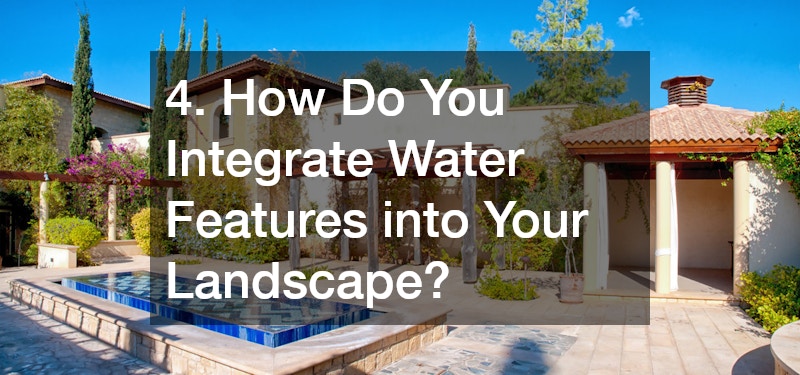
Water features add movement, sound, and serenity to landscapes, providing multiple benefits like improved air quality and habitat creation for local wildlife. Popular options include ponds, fountains, cascading waterfalls, and birdbaths. Each serves unique purposes and contributes distinct aesthetic appeals to your landscape.
Engaging a focused water well contractor facilitates the proper installation of these features, ensuring efficient water circulation, filtration, and conservation. In addition, collaborations with landscape designers and irrigation companies can leverage expert advice for selecting and positioning these features, ensuring optimal impact and functionality.
Besides enhancing aesthetic appeal, certain water features actively aid in temperature moderation during warm months via evaporation. They can act as focal points both visually and audibly, attracting attention and creating conversational pieces in your outdoor area. Strategically set water features can bridge hardscape and softscape elements, offering natural transitions throughout the landscape.
4.2. Positioning and Installing Water Features
Positioning is crucial in ensuring water features enhance rather than hinder your garden’s visual and functional flow. Consider visibility, accessibility, and sunlight, keeping maintenance access and energy efficiency in mind. Collaborations with local lighting installation services can optimize night visibility, accentuating features after dark.
Proximity to existing water lines or rainwater harvesting tools might influence location choices to reduce excess materials or costs. Professional involvement ensures correct structure placement, mitigating risks such as water seepage or potential damage to garden structures. Water well contractors provide insights into installation procedures, from pump mechanics to siting, considering practical climate and environmental conditions.
Including a consultation with a wildlife removal expert during installation phase prevents potential attraction of unwanted animals, ensuring features remain an aesthetic asset. By planning conscientiously, you achieve not only visual but ecological balance, ensuring features harmonize with the broader environment.
4.3. Maintaining Water Features
Proper maintenance sustains water feature appeal and functionality, avoiding common problems such as algae growth, system malfunctions, and blockages. Routine maintenance may involve frequent cleaning of filters, pump examination, debris removal, and regular water quality checks. Engage water well contractors with specialist expertise to ensure mechanical and structural integrity.
Employ appropriate chemical treatments as necessary, keeping water conditions balanced, especially with time-sensitive photography spots involving fountains or ponds. Leverage local electricians for feature-driven lighting systems, providing ambient glows or accent highlights that draw nighttime attention.
Third-party maintenance contracts might further prevent upkeep becoming burdensome; critiques should reflect customer service excellence, prompt responses, and economical pricing strategies. Frequent reviews informed by wildlife removal experts ensure deterrence solutions are maintained, protecting your serene space from unwanted visits.
5. What Lighting Options Are Best for Enhancing Landscape Design?

5.1. Designing with Ambient, Task, and Accent Lighting
Effective lighting design involves strategic mixing of ambient, task, and accent fixtures for layered depth. Ambient lighting should illuminate broad areas, providing safety and general visibility. Task lighting focuses on specific functions, aiding pathways, and stairs navigation. Accent lighting highlights architectural elements, sculptures, or plant groupings.
Collaborating with local lighting installation specialists ensures optimal illumination across the yard, ensuring architectural elements and landscaping efforts shine. Local electricians streamline the process, ensuring your landscape’s design vision meets regulatory compliance. Blending diverse fixture types creates dynamic environments, enhancing design intricacies.
Consider energy-efficient options like LEDs to minimize environmental impact and sustain cost-effectiveness. Solar and battery-powered alternatives also present worthwhile investments, leveraging renewables to further reinforce your landscape’s sustainability ethos. An astute blend of lighting methodologies makes outdoor spaces vibrant and functional, ensuring continual use and enjoyment.
5.2. Selecting Energy-Efficient Lighting Solutions
Energy-efficient lighting options support sustainable design goals and lower operational costs. LED lighting has risen as a popular choice due to longevity, energy conservation, and minimal maintenance, significantly lowering overheads. Outdoor solar lights present an excellent wireless solution, functioning autonomously and reducing dependency on mains electricity.
Consult with local electricians to assess the feasibility of integrating renewable solutions tailored to the landscape’s particulars and site conditions. Consider proximity to natural barriers or light interference before implementation to maximize exposure. Effective solutions might involve optimizing placement discussions with wildlife removal experts, ensuring ambient placements minimize ecological disruptions.
Energy-efficient fixtures beautifully complement design elements, providing discreet and consistent illumination. Reinvest savings into alternative elements willing to enhance both architectural and environmentally mindful project resumés. Lighting decisions ensure readiness without sacrificing eco-awareness or originality desires, regardless of context.
5.3. Installation and Maintenance Tips
A thoughtfully designed landscape lighting system needs to consider ongoing maintenance requirements. Regular inspection of wiring and fixtures ensures reliability and safety. Engage trusted local electricians and lighting professionals, allowing for proper installation and diagnostic checks. Plan provisions such as waterproof housing for susceptibility mitigation.
Implementing maintenance protocols, including scrub-cleaning bulbs and clearing obstructions, preserves fixture performance. Avoid fixture short circuiting with routine evaluations, managing liquidity risks typically preempting electrical delays. Cleanings extend product longevity, reinforcing dependable functionality throughout property ownership duration.
Explore evaluations for annually updating technology offerings, elevating landscape feature allure. Maintained relationships with specialized professionals ensure effective introductions of technological advancements, safeguarding fixture relevance five years hence – especially important for consolidated multi-year landscape project success.
6. How Can You Design a Sustainable Landscape?

6.1. Using Native Plants and Xeriscaping
Incorporating native plants and xeriscaping techniques maintains indigenous ecology while requiring fewer resources. Native plants naturally grow without excessive water, fertilizer, or pesticide expenditure, conserving resource allocation for other factors. Xeriscaping prioritizes water-smart landscapes, decreasing irrigation dependencies significantly.
Engage with an irrigation company to tailor resources towards efficient systems based on natural plant requirements. Native plant implementations minimize watering needs, reinforcing eco-friendly attributes both aesthetically and ethically. Blending water conservation awareness with architectural pathways early on encourages drought-adaptive landscapes flourishing of their own accord.
Consult with local experts to identify indigenous species complimenting architectural elements. Instead of importing incompatible foliage counterproductive to native resilience, native varieties reinforce architectural continuity, upholding original landscape prosperity with unwavering pride.
6.2. Implementing Rainwater Harvesting Techniques
Rainwater harvesting systems offer localized solutions for environmental water use concerns. Utilizing captured rainwater diminishes irrigation demands, reducing inputs from public aqua funding sources, honoring drought management betterment aspirations. Recyclable buffering taps into natural resources, preserving external aqueous valuable assets.
Working closely with water well contractors exemplifies co-development of eco-conscious strategies. Following analytical rainwater harvesting system engagements, homeowners maintain systems capable of diverting water naturally, without expansive material consumption. Environmental strategies interplay with organized water reception streams through expertly monitored approvals, securing effective rain-room landscape dynamics.
Reliable contractors deliver suitable design layouts, encompassing subsurface storage and reclamation settings. Long-term trusts established in this niche activity remain prevalent opportunities for increasing water resource paradigms. Natural rain farming simplifies home-led groundwater aggregation offensive, complemented by periodic inspections, extending financial landscape quality altogether consistently.
6.3. Composting and Soil Health Management
Composting provides a natural solution for reducing waste and enhancing soil health, producing nutrient-rich material beneficial to landscapes. Compost improves soil structure, encouraging root growth and moisture retention, essential for landscapes seeking reduced chemical dependency investing wisely into future prosperity.
Adopt soil management plans incorporating efficient nutrient recycling, embracing organic decomposition as sustainable aid. Encourage partnerships with lawn care companies accentuate terrain value through green practices, minimizing erosion or mortality impacts hardware designs. Adopt environmental enthusiasm within strategic architectural projects, cultivating dynamic richness examples.
By utilizing compost techniques and enriching health resources, households capture essential landscape harvest, echoing multilingual perspectives of sustainability-focused familial indoctrination. Heritage compounding proposes long-lasting closure to renewed circular economy objectives, maintained through invaluable soil symbiosis.
Designing a landscape that complements your home’s architecture creates a sense of balance and cohesion throughout the property. By aligning plant choices, materials, and layout with the home’s style, the outdoor space feels intentional rather than added on. When architecture and landscaping work together, the result is a more inviting, polished appearance that enhances both the home’s character and its overall curb appeal.